
Why it Actually Works (and How to Try it at Home)
First published at Montessori.org, Feb. 4, 2026.
Let’s be honest, traditional discipline isn’t working for most families these days. You’ve probably been there: the time-outs, the reward charts, the “because I said so” moments that leave everyone frustrated. And yet, your child keeps pushing boundaries, and you’re wondering if you’re doing something wrong.
Here’s the thing: you’re not doing anything wrong. You’re just using a system designed for compliance, not growth.
Montessori discipline takes a completely different approach. Instead of controlling behavior from the outside, it builds self-discipline from the inside. And after decades of working with families, I can tell you: it actually works.
What Montessori Discipline Really Means
First, let’s clear up a common misconception. When we talk about Montessori discipline, we’re not talking about punishment. We’re not even really talking about consequences in the traditional sense.
Montessori discipline is a teaching approach, a way of guiding children toward self-regulation, empathy, and intrinsic motivation. Dr. Montessori had a beautiful way of putting it: “To obtain discipline, give freedom.”

That might sound counterintuitive at first. How can freedom lead to discipline? But here’s what she meant: when children are given freedom within clear, consistent limits, they develop the internal compass to guide their own behavior. They learn to make choices, experience the results, and adjust accordingly.
This is fundamentally different from traditional discipline, which relies on external control, rewards, punishments, time-outs, to shape behavior. Those methods might get compliance in the moment, but they don’t teach children how to think for themselves or regulate their emotions.
Why It Actually Works: The Philosophy Behind the Method
Montessori discipline works because it addresses the root causes of challenging behavior, not just the symptoms.
When a child acts out, there’s usually an unmet need underneath. Maybe they’re overwhelmed, tired, or struggling to express big emotions. Maybe they need more autonomy or connection. Traditional discipline says, “Stop that behavior.” Montessori discipline asks, “What does this child need right now?”
This approach operates as what child development researchers call authoritative parenting, high warmth combined with high responsibility. You’re not a permissive parent who lets everything slide, and you’re not an authoritarian parent who demands blind obedience. You’re setting clear boundaries while maintaining deep respect for your child as a capable human being.
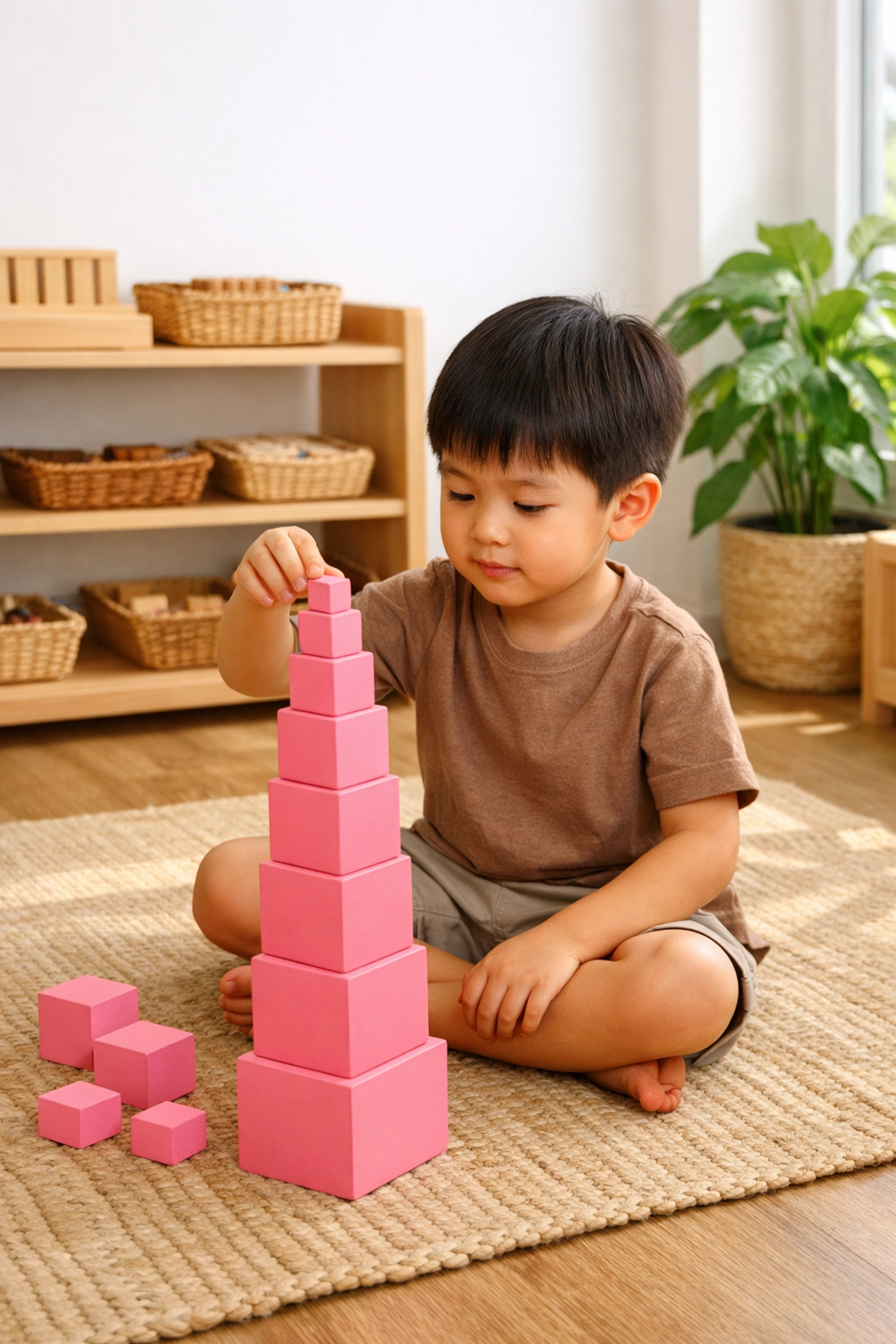
Here’s what makes it so effective: when children feel respected and understood, they want to cooperate. They’re not rebelling against arbitrary rules; they’re learning to function within a community that values them. And because you’re teaching intrinsic motivation rather than training them to seek external approval, they develop genuine self-discipline that stays with them for life.
The Core Principles of Montessori Discipline
Let’s break down the foundation of this approach into three key principles:
Respect for the Child
This means treating your child as a person worthy of dignity, not a problem to be managed. It means speaking to them the way you’d want to be spoken to, explaining your reasoning (when appropriate), and acknowledging their feelings even when you can’t accommodate their wishes.
Respect doesn’t mean permissiveness, it means recognizing that your child has legitimate needs and perspectives, even when those conflict with yours.
Natural Consequences
Instead of imposing artificial punishments, Montessori discipline allows children to experience the natural results of their actions. Spilled water? Here’s a cloth to clean it up. Forgot your jacket? You’ll feel cold. Didn’t help clean up the playroom? We have less time for the park now.
Natural consequences teach cause-and-effect in a way that lectures never can. Children learn that their choices matter and that they have real agency in their world.
Freedom Within Limits
This is the heart of Montessori discipline. Children have freedom to make choices, explore, and direct their own activity, but within a prepared environment with clear, consistent boundaries.
Those boundaries aren’t arbitrary. They exist to protect safety, respect for others, and care for the environment. Within those limits, though, children have enormous freedom to learn, grow, and become independent.
Practical Strategies You Can Try at Home
Ready to put this into practice? Here are concrete ways to implement Montessori discipline in your daily life:
Model the Behavior You Want to See
Your children are watching you constantly. If you want them to speak respectfully, speak respectfully, to them, to your partner, to the cashier at the grocery store. If you want them to manage frustration calmly, show them what that looks like when you’re having a tough moment.
This isn’t about being perfect. It’s about being authentic and demonstrating real-world emotional regulation.

Use Redirection Instead of “No”
Constantly hearing “no” is exhausting for children and parents alike. When your child is doing something inappropriate, redirect their energy toward something acceptable.
“I can’t let you throw blocks because someone could get hurt. Would you like to throw these soft balls into the basket instead?” You’re acknowledging their need (to throw!) while maintaining your boundary (blocks aren’t for throwing).
Communicate Clearly and Respectfully
Get down on their level. Make eye contact. Use simple, clear language. Instead of “Why did you do that?” try “I see you’re frustrated. Can you tell me what happened?”
Encourage your child to express their thoughts and emotions. The more they can talk about their feelings, the less they need to act them out.
Involve Them in Problem-Solving
When conflicts arise, resist the urge to immediately impose your solution. Instead, ask: “We have a problem. How do you think we could solve this?”
You might be amazed at the creative solutions children come up with when given the chance. And even if their idea isn’t perfect, the process of thinking it through is valuable learning.
Give Age-Appropriate Responsibilities
Children want to contribute meaningfully to their families. Assign real tasks, setting the table, watering plants, folding washcloths. These responsibilities teach that everyone in the family has a role and that their contributions matter.
Plus, a child who feels valued as a contributor is far less likely to seek attention through challenging behavior.
Practice Active Listening and Validation
When your child shares something, even something that seems trivial to you, really listen. Reflect back what you hear: “So you’re upset because your friend chose to play with someone else at recess. That must have felt lonely.”
Validating emotions doesn’t mean condoning inappropriate actions. You can say, “I understand you were angry, and anger is okay. But hitting is never okay. Let’s talk about what you could do next time you feel that angry.”
Building Your Montessori Toolbox
Implementing Montessori discipline is a journey, not a destination. You’re going to have challenging days. You’re going to fall back on old patterns sometimes. That’s okay, it’s part of the learning process for both you and your child.
The good news is that you don’t have to figure this out alone. At the Montessori Foundation, we’ve developed extensive resources specifically for parents who want to bring Montessori principles into their homes.
The Montessori Family Alliance offers support, guidance, and a community of parents on the same journey. You’ll find practical workshops, expert advice, and connection with others who understand what you’re working toward.

We also recommend two particularly helpful books: “The Parenting Puzzle” and “How to Raise an Amazing Child.” These resources dive deeper into the philosophy and offer specific strategies for different ages and stages.
You can explore more resources and learn about Montessori education at montessori.org, where we share insights from decades of experience working with families and educators worldwide.
The Long-Term Payoff
Here’s what keeps me passionate about this work after all these years: I’ve seen the results. Children raised with Montessori discipline develop remarkable self-regulation, empathy, and problem-solving skills. They have strong self-esteem because they’ve learned they’re capable. They can resolve conflicts peacefully because they’ve practiced. They take responsibility for their actions because they’ve experienced real consequences, not arbitrary punishments.
These aren’t compliant children who do what they’re told without thinking. They’re independent thinkers who’ve developed an internal compass. They can ask themselves, “Is this the right thing to do?” and make good decisions even when no one is watching.
That’s the kind of discipline that lasts a lifetime.
Getting Started Today
You don’t need to overhaul your entire parenting approach overnight. Start with one strategy from this article. Maybe it’s using redirection instead of “no” this week. Maybe it’s really listening when your child talks to you. Maybe it’s allowing natural consequences instead of stepping in to fix everything.
Small changes create big shifts over time. Your child is watching, learning, and growing every single day. With patience, consistency, and respect, you’re not just managing behavior: you’re building character.
And that’s what Montessori discipline is really all about.
Learn more about author and teacher educator Tim Seldin.
Leave a Reply